
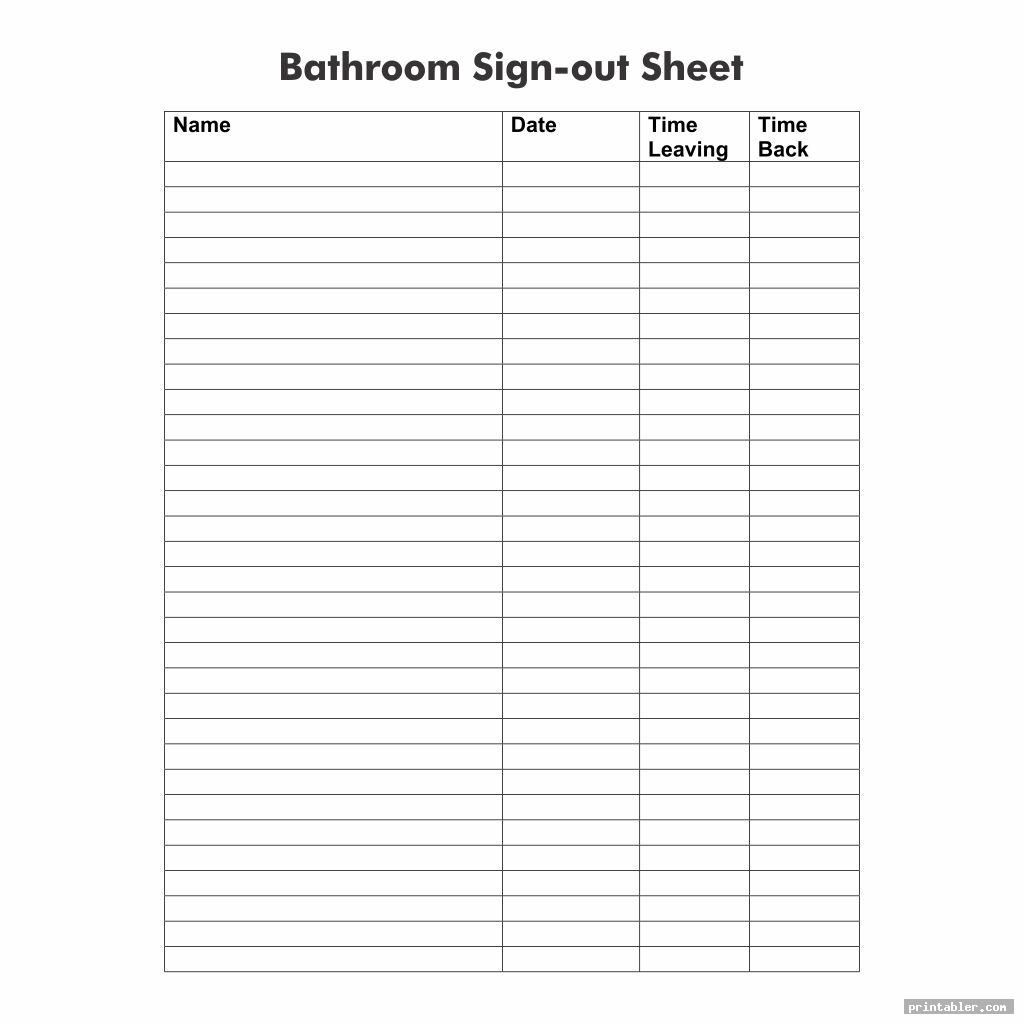
Ever walked into an office only to find every bathroom occupied, despite there being five stalls? It’s a small frustration, but it adds up. That’s why I started using a bathroom sign out sheet in my coworking space. It sounds simple, but it solved a surprisingly persistent problem. The sheet itself is just a clipboard with a basic table, yet it’s become a cornerstone of our shared space etiquette. It’s not about control—it’s about clarity. When everyone knows who’s in which stall and when they’ll be out, the guesswork disappears. And honestly, it’s saved more than a few awkward hallway encounters.
Why a Bathroom Sign Out Sheet Works
The beauty of a bathroom sign out sheet lies in its simplicity. It’s a low-tech solution to a high-frequency issue. In my experience, digital tools often overcomplicate things—apps crash, notifications fail, and not everyone checks their phone mid-meeting. A physical sheet, on the other hand, is always there. It’s visible, it’s immediate, and it doesn’t require a login. I’ve seen offices try everything from traffic lights to sensor systems, but nothing beats the reliability of a clipboard and pen. Plus, it’s inclusive. Even the least tech-savvy person can understand it.
How to Implement One Effectively
Setting up a bathroom sign out sheet doesn’t require a degree in logistics, but there are a few key steps to make it stick. First, place the sheet in a high-traffic area near the bathrooms—not inside, where it’s easily ignored. Use a durable clipboard and a pen with a string attached (trust me, pens disappear otherwise). The layout should be straightforward: columns for name, stall number, and time in/out. I’ve found that adding a “time limit” column helps discourage stall monopolization, though it’s rarely needed. Finally, communicate the system clearly. A quick email or announcement goes a long way.
Common Pitfalls to Avoid
Not everyone embraces the system immediately. Some people forget to sign out, while others resist the idea altogether. I’ve learned that consistency is key. If one person skips the sheet, others will follow. To combat this, I started leaving friendly reminders on sticky notes. Another issue is illegible handwriting—a problem I solved by switching to a larger font on the sheet template. And while it’s tempting to add rules, keep it simple. Overcomplicating the process defeats the purpose.
The Unexpected Benefits
Here’s the thing: a bathroom sign out sheet does more than manage stalls. It fosters a sense of community. When people participate, they’re acknowledging a shared space and the needs of others. I’ve noticed that it’s also a conversation starter—a bit of humor on the sheet can lighten the mood. Once, someone wrote “Royal Flush” under their name, and it became an inside joke. It’s these small moments that make a workspace feel human. Plus, it’s a subtle way to track usage patterns, which can inform future facility decisions.
💡 Note: If you’re worried about privacy, consider using initials or employee numbers instead of full names. It’s a small tweak that can make everyone more comfortable.
While a bathroom sign out sheet might seem like a minor detail, it’s a reflection of how we approach shared spaces. It’s about respect, efficiency, and a bit of creativity. Next time you’re stuck waiting outside a bathroom, think about how a simple sheet of paper could change the game. It’s not just about stalls—it’s about building a smoother, more considerate environment for everyone.
Related Terms:
- restroom sign out form
- student bathroom sign out sheet
- bathroom sign out sheet pdf
- bathroom sign out sheet free
- bathroom sign out pdf
- printable bathroom sign out sheet


