
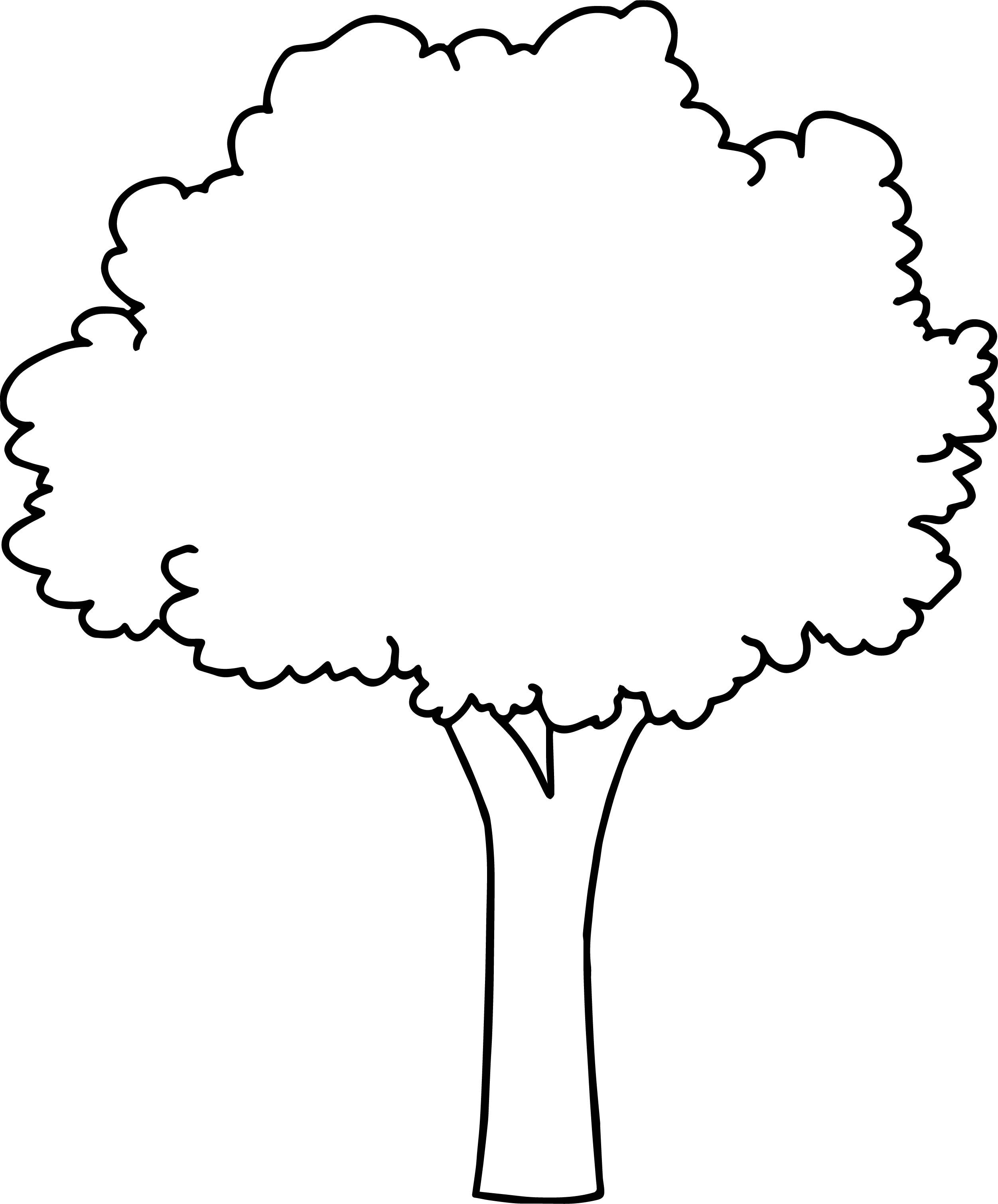
Last November I printed forty tree coloring sheets for a mixed-age after-school group, and the results taught me more about paper stock than any art class had. The five-year-olds tore through thin 20 lb copy paper with crayon pressure alone, while the ten-year-olds ignored a detailed oak covered in acorns and fought over a bare-branched birch outline. A tree coloring sheet is not one product. It is a category, and treating every printable as interchangeable wastes paper and burns a child's attention span.
What Separates a Good Tree Coloring Sheet From Filler
Silhouette clarity beats artistic detail every time. I've run sheets from SuperColoring and a couple of Etsy illustrators past the same group of kids, and the ones they return to share one trait: the tree reads instantly from arm's length. If a child has to squint to find the trunk, the sheet is already dead.
Line weight is the second variable, and it's the one most free printables get wrong. Hairline 0.5 pt outlines look refined on a monitor and disappear under a fat marker tip. I now look for roughly 1.5 to 2 pt contours, which hold their shape under Crayola washable markers without bleeding into neighboring shapes. Heavier outlines also survive photocopying, which matters if you're running 30 copies at a school.
Matching the Tree Coloring Sheet to the Age Group
Age is a rough proxy for fine motor control, which is the real constraint. The table below reflects what worked in my own sessions rather than publisher recommendations.
| Age | Sheet style | Best tool | Common pitfall |
|---|---|---|---|
| 3–5 | Single trunk, cloud-shaped canopy | Chunky crayons | Leaf clusters smaller than a fingertip |
| 6–8 | Seasonal tree with apples or blossoms | Colored pencils | Fruit drawn too small to layer color |
| 9–12 | Botanical or mandala-style canopy | Fine liners, gel pens | Dense linework that turns into a gray smear |
Older kids handle complexity only when the shapes are large enough to separate visually. A mandala tree with 200 identical leaf modules looks impressive on Pinterest and produces frustration in practice. I cut those sessions short and switch to two-tone shading exercises instead.
Why Trees Beat Most Other Coloring Subjects
Botany curriculum aside, trees tolerate imprecision. A child can color a canopy in swirls, blocks, or single strokes and the result still looks intentional. That forgiving quality is why I reach for deciduous tree outlines before butterflies or faces during mixed-ability sessions. It also opens a door to identification: ask a child to pick three leaf shapes and color each differently, and the sheet quietly becomes a match-the-leaves exercise.
Accuracy is worth checking. A maple leaf carries palmate lobes with pointed tips, an oak leaf is rounded and lobed, and a conifer's needles radiate in clusters rather than sitting flat. Sheets that blur these distinctions teach the wrong thing, and I've quietly retired several otherwise attractive printables for that reason. If the sheet is labeled by species, hold it to that standard.
Printing Choices That Make a Real Difference
Paper weight is not a minor detail. Standard 20 lb bond is fine for a five-minute warm-up, but anything intended to be colored with markers needs 65 lb cardstock or heavier. Marker bleed-through on cheap paper ruins the reverse side and, in my experience, puts kids off finishing the sheet. Smooth cardstock also takes colored pencil burnishing far better than textured watercolor paper, which fights the pigment and leaves white speckles.
Print settings matter too. Grayscale or draft mode on most inkjets reduces ink use noticeably for outline-only artwork, since there's no color information to lose. Set scaling to "actual size" rather than "fit to page" so the printed tree keeps the proportions the illustrator drew. Landscape orientation suits wide spreading canopies; portrait suits tall, narrow species like poplar or cypress.
If you're printing a set for a classroom, sort by difficulty rather than by species. Handing a detailed botanical sheet to a child who wanted a simple outline is the fastest way to lose the room.
🌳 Note: If your printer leaves fine lines broken or faint, clean the print head before blaming the file. I wasted a dozen sheets through a clogged nozzle on a design I'd already used successfully.
One thing I’ve started doing: printing a blank trunk-and-branch template and letting kids draw their own canopy. It removes the pressure of coloring inside lines for younger children and gives older ones a composition exercise that a printed outline can’t. Keep a stack of those templates beside the finished sheets and watch which pile empties first.
Related Terms:
- free christmas tree coloring sheet
- printable christmas tree coloring sheet
- tree coloring sheet printable
- family tree coloring sheet
- tree coloring page
- apple tree coloring sheet


